A Professional's Look at the Advertisement Icons Embroidery Design
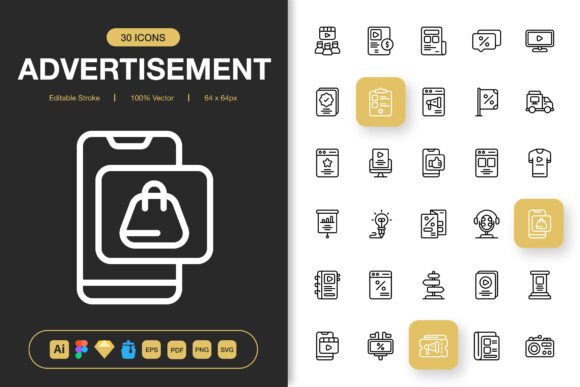
Whenever I'm considering a new embroidery design for my work or for my clients, I look at it from a practical perspective. How will it stitch out? What will it feel like on the final product? The Advertisement Icons set immediately struck me as a versatile toolkit, but in embroidery, versatility needs to translate into stitchability and visual impact. Let's walk through what that means.
The Clean, Confident First Impression
Opening this machine embroidery file, the mood is clear: modern, communicative, and uncluttered. The minimalist icon design promises clean shapes and defined edges. This visual personality is a huge advantage. On a custom apparel item like a premium sweatshirt or a tote bag, these icons won’t feel busy or overwhelming. They convey information—or simply style—with a quiet confidence that elevates a handmade product. For a craft business owner creating boutique branding or an Etsy seller offering personalized gifts, that clean aesthetic builds immediate customer trust and a sense of professionalism.
Where These Icons Naturally Belong
I pictured a specific scenario: a client wanting a set of embroidered tea towels as a wedding gift for a couple who just launched their own small business. The Advertisement Icons set could provide perfect, subtle branding. A single icon on each towel, maybe the ‘like’ or ‘share’ symbol, stitched in a complementary thread color. It’s thoughtful, useful, and visually cohesive. That’s the power here. These graphics aren’t just for websites; they translate beautifully into physical embroidery projects like pillow covers, aprons for a creative entrepreneur, or even baby clothes for a modern nursery decor theme.
Performance on Real Fabrics and Products
The true test is how a design behaves after stitching. For Advertisement Icons, the simplicity is its greatest strength for real-life application. On a dense sweatshirt embroidery, the clean lines will prevent overly dense stitch density areas that can make fabric stiff. On a tote bag, often made from canvas or cotton, the icons will stitch out with crisp satin stitch borders or solid fill stitch areas, maintaining their recognizability.
I would, however, be cautious with very small implementations. Embroidering one of these icons onto the curved surface of a cap requires careful attention. The smaller the hoop size, the more those clean corners and lines need to hold up. Always test the design on scrap fabric first, especially if you plan to stitch onto stretchy fabric or textured fabrics like some blankets. Using the proper stabilizer is non-negotiable here to preserve that minimalist integrity.
Visual Appeal and Customer Reaction
From a buyer’s perspective, an embroidered patch featuring one of these icons feels contemporary and intentional. It doesn’t look like a generic, mass-produced image. That boosts the perceived value of your small shop product. For holiday embroidery gifts, such as a personalized pillow cover with a favorite icon, the giftability is high because it’s both personal and stylish. The visual clarity after stitching ensures the design’s purpose—to communicate a simple idea—is never lost, which directly increases buyer engagement with the finished product.
Careful Considerations for a Flawless Finish
While this set is described as suitable for any project, an experienced embroiderer knows that adaptation is key. On dark fabric, the choice of thread colors becomes paramount. You might need to swap a suggested light thread for a brighter, more contrasting one to maintain the icon’s impact. I strongly advise checking thread color contrast in both digital mockups and physical tests.
Also, inspect the small details in your software before stitching. Even minimalist designs can have tiny junctions or closed shapes that might translate into excessive stitching in a small area. For products that need frequent washing, like kitchen towels or baby embroidery items, ensuring the stitch structure is robust enough to withstand wear is important. A well-digitized file will handle this, but you must confirm it through a test run.
Notes for the Commercial Maker
If you're using this for commercial embroidery or selling the finished items, your due diligence is slightly different. First, always confirm licensing before selling finished items. The product description suggests broad suitability, but the specifics matter for your craft business. Can you use it on products you sell at a craft fair? Can you use it in digital product previews or printable mockups for your online store? Verify this.
Secondly, for brand consistency across a line of merchandise—say, a series of embroidered patches for different social platforms—the Advertisement Icons set offers a cohesive family of design assets. Stitch them in the same thread palette and on similar fabrics to create a powerful, branded collection. This professionalism directly translates into customer confidence and repeat business.
A Final, Practical Judgment
In my hands, as a designer preparing for a real project—perhaps a limited run of branded caps for a local business—the Advertisement Icons set feels like a reliable, high-quality tool. Its minimalist nature is not a limitation but a guide. It tells you to focus on execution: perfect your stabilizer, choose your fabric background wisely, and let the clean shapes speak for themselves. It changes your next projects not by being flashy, but by being fundamentally sound and adaptable. That’s the kind of embroidery file that supports a sustainable, creative practice, whether you’re a hobbyist making a holiday gift or a professional building a line of custom apparel.